
+9108334075584 / +919830654250
Experience innovative software solutions from ATM Softek Private Limited. Fill out the form below and our team will contact you soon.
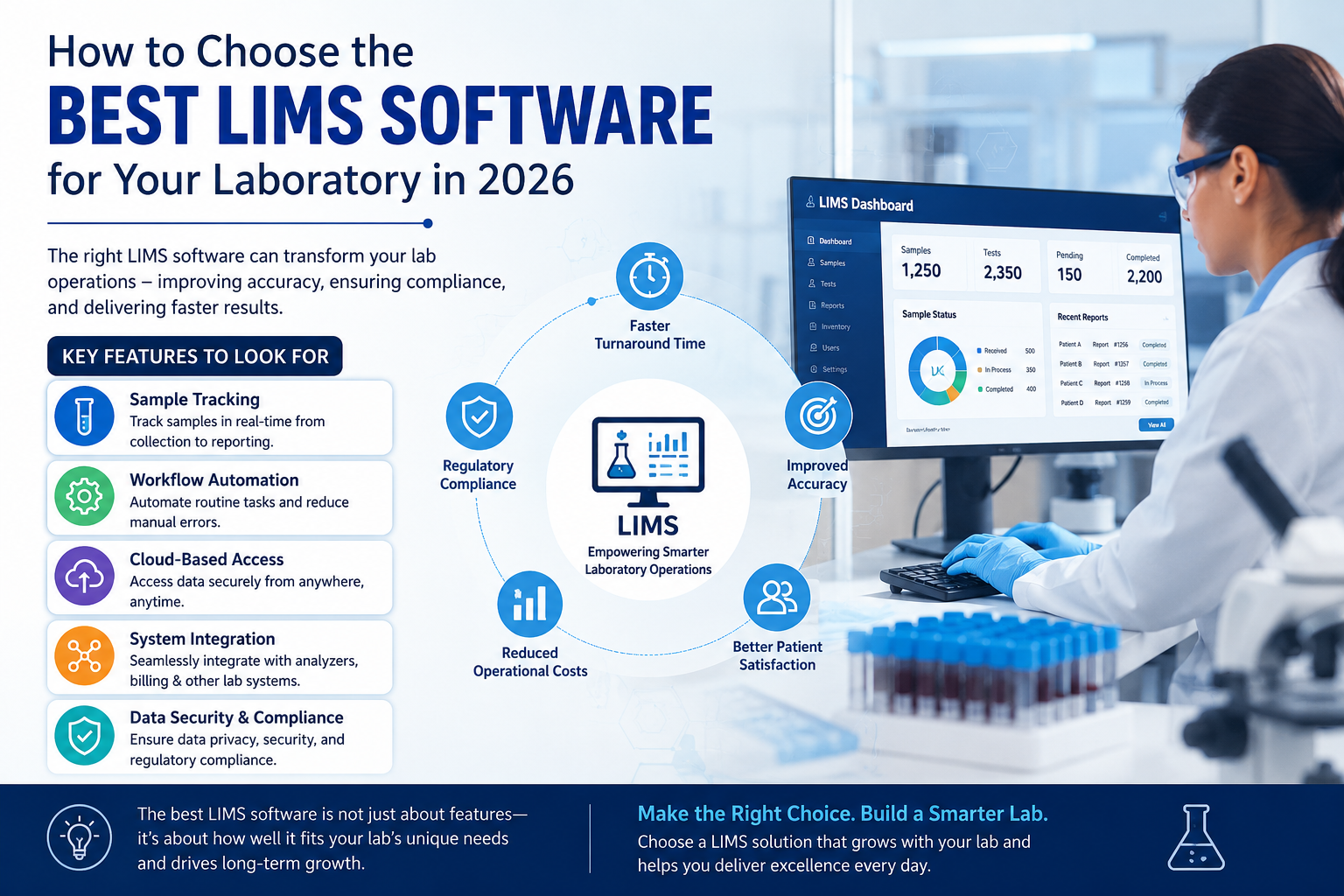
Laboratories today generate more data than ever before. Whether it is a hospital-based diagnostic lab, an independent pathology centre, or a research facility, managing samples, tests, results, and compliance manually is no longer sustainable. The best LIMS software does more than digitise records — it transforms lab operations into a streamlined, audit-ready workflow that saves time and reduces error.
A Laboratory Information Management System (LIMS) is specialised software designed to manage the complete lifecycle of laboratory samples and associated data. From sample registration and tracking through testing, result generation, and reporting, a LIMS acts as the operational backbone of any modern lab.
Beyond basic data entry, LIMS software for labs integrates with instruments, enforces quality control protocols, and ensures compliance with regulatory standards such as NABL, ISO 15189, and CAP. The result is a lab that operates faster, with fewer errors, and with full traceability.
When evaluating lab management software, prioritise the following capabilities:
Pathology lab software built on a strong LIMS foundation delivers measurable operational improvements. Labs report significant reductions in sample processing time and near-elimination of manual transcription errors after implementation. Healthcare lab software solutions also reduce patient complaints related to delayed or incorrect reports.
From a business standpoint, LIMS software features like automated billing integration and daily MIS reports give lab owners real-time visibility into revenue, test volumes, and pending collections — turning operational data into actionable management intelligence.
Selecting lab management software is a long-term investment. Evaluate candidates against these criteria:
The shift toward cloud-based LIMS systems has accelerated considerably. For most small to mid-sized labs, cloud deployment reduces upfront costs, eliminates server maintenance, and enables real-time access from any device. Multi-branch diagnostic lab networks benefit especially from centralised data and standardised workflows across locations.
Large hospital laboratory complexes with dedicated IT infrastructure may still prefer on-premise deployment for data sovereignty and deeper EMR integration. In either case, ensure the vendor provides regular updates, encrypted data storage, and a clear disaster recovery plan.
What is the difference between LIMS and LIS?
A Laboratory Information System (LIS) is primarily used in clinical and hospital settings for patient test management and physician-facing reporting. A LIMS is broader in scope and covers sample lifecycle, regulatory compliance, QC management, and instrument interfacing — making it the preferred choice for diagnostic labs, research facilities, and industrial laboratories.
Is a cloud-based LIMS system secure for patient data?
Reputable cloud LIMS vendors implement AES-256 encryption for data at rest and in transit, role-based access controls, and regular security audits. When evaluating a vendor, request their data processing agreement and confirm compliance with applicable regulations such as HIPAA or the Digital Personal Data Protection Act (India).
How long does LIMS implementation typically take?
For a standalone pathology lab, a well-supported cloud LIMS can be operational within two to four weeks, including data migration and staff training. Multi-site or hospital-integrated deployments typically require eight to sixteen weeks depending on interface complexity and customisation requirements.
Can LIMS software replace manual sample tracking completely?
Yes. A modern sample tracking system within a LIMS covers every stage from collection to archival, using barcode scanning, chain-of-custody logs, and automated status alerts. Manual registers become redundant, and the complete audit trail is available on demand for accreditation inspections.
What should small pathology labs prioritise when choosing LIMS?
Small labs should prioritise ease of use, affordable subscription pricing, and strong local support. Core must-haves include patient registration, test order management, automated report generation, and billing integration. Advanced modules such as quality control dashboards and referral management can be added as the lab grows.
The best LIMS software in 2026 is one that fits your lab’s specific workflow, scales with your ambitions, and is backed by a vendor invested in your success. Whether you are running a single-bench pathology lab or a multi-specialty diagnostic network, investing in the right Laboratory Information Management System is the single highest-leverage operational decision a lab director can make this year.
Looking for pathology lab software or a full healthcare lab software solution? Contact ATM Softek: info@atmsoftek.in | 8334075584 | 9830654250

Our business solutions and services help accelerate innovation, increase productivity, reduce costs, and optimize asset utilization.
Copyright @. ATM Softek Private Limited. All Rights Reserved By ATM Softek Private Limited.